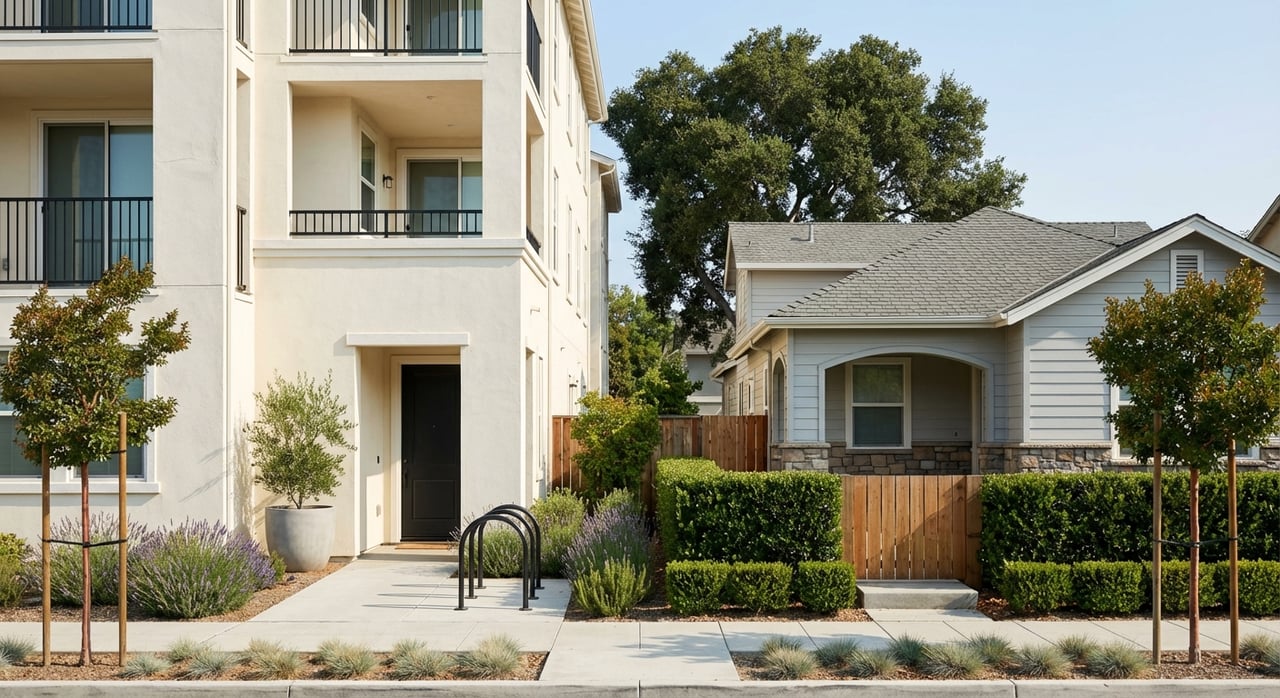
Are you torn between the lock-and-leave ease of a condo and the space and privacy of a single-family home in San Mateo? You are not alone. Each path comes with different costs, responsibilities, and financing rules that can shape your day-to-day life and long-term value. In this guide, you will learn how to compare monthly costs, HOA realities, lending and resale factors, and local lifestyle trade-offs so you can buy with confidence. Let’s dive in.
San Mateo market at a glance
San Mateo is a high-demand Peninsula market with a wide spread between condo and single-family pricing. Recent city indexes show a median sale price around the mid seven figures as of January 2026, with neighborhood-level differences that can be significant. Higher-priced single-family pockets like the Highlands and Hillsdale often trade well above the city median, while many downtown and mid-rise condos sell at lower price points.
Condos and townhomes remain a common entry point. Recent listings in San Mateo span roughly 500,000 to 1.5 million dollars for most condos, with larger townhome-style units in desirable areas sometimes reaching the 1.4 to 1.7 million dollar range. Single-family homes typically command higher prices, especially on larger lots or in hillside neighborhoods.
Total cost: what your payment covers
When you model your monthly payment, look beyond the purchase price. Your true monthly carry usually includes:
- Mortgage principal and interest
- Property taxes
- Homeowner’s or condo insurance
- HOA dues for condos and some townhomes
- Utilities and services
- Maintenance and a buffer for repairs or special assessments
San Mateo County property taxes start with a 1 percent base under Proposition 13, then add parcel charges and bonds. Effective rates often land around 1.1 to 1.4 percent of the assessed value per year. For parcel-specific details, start with the county’s Assessor Office guidance.
HOA dues in San Mateo
HOA dues vary widely by building age, amenities, and what is included. Recent local listings often show dues in the 200 to 800 dollars per month range. Dues may cover exterior maintenance, common areas, landscaping, building-shell insurance under the master policy, trash, and sometimes water or amenities. Always confirm the line items in the HOA budget and verify coverage on the association’s insurance certificate.
Taxes and transfer costs
In addition to property taxes, San Mateo County collects a documentary transfer tax at recording. Some cities, including San Mateo, also levy a city-level conveyance tax. The county explains the calculation and city add-ons on its Documentary Transfer Tax page. Who pays which portion is a negotiable term in many transactions, so plan for it during budgeting.
Insurance basics by property type
- Condos and townhomes: The HOA’s master policy typically covers the building and common areas. You will carry an HO-6 unit owner policy for interior finishes, personal property, liability, and loss assessment coverage. For a simple overview of HO-6 coverage, see this condo insurance guide.
- Single-family homes: You will carry a homeowners policy on the structure and contents. In California, earthquake coverage is usually a separate policy. Evaluate parcel-level flood or other hazards during due diligence.
Ownership and maintenance differences
Who fixes what in condos
California’s Davis–Stirling Act sets default responsibilities between the HOA and the unit owner. The association generally maintains, repairs, and replaces common areas. Owners are responsible for the interior of their separate interest unless the declaration says otherwise. You can review the allocation in Civil Code Section 4775.
In practice, many disputes and unexpected costs arise from gaps in the HOA’s budget or unclear definitions in the governing documents. Clarify responsibilities and funding early, before you write an offer.
Reserve studies and assessments
Associations are required to plan for long-term capital needs and to disclose a reserve summary in the annual budget. Always request the latest reserve study and the association’s percent-funded calculation, plus the most recent financials and board meeting minutes. A practical overview of these obligations is available in this Davis–Stirling resource.
Key questions to ask:
- What is the current reserve percent funded?
- Are special assessments proposed or recently levied?
- How large is the master insurance deductible and who pays if there is a claim?
Balcony law compliance
California’s SB 326 and SB 721 require inspections of exterior elevated elements, such as balconies and walkways, on specific timelines. Ask if inspections are complete, what was found, and whether repairs or assessments are pending. The City of Burlingame provides a helpful summary of SB 721 and SB 326 balcony law requirements.
Financing and resale realities
Condo warrantability
Condo financing often depends on project-level eligibility. Conventional lenders may require a warrantable project, and FHA or VA loans rely on federal approvals or single-unit exceptions. Issues such as high investor concentration, low reserves, high delinquency, pending litigation, or an outsized master policy deductible can limit loan options or raise costs. Review master policy details, reserve funding, delinquency rates, and any litigation with your lender early. Fannie Mae outlines master property insurance and deductible requirements, and FHA condo approval rules are summarized in 24 CFR 203.43b.
Resale demand patterns
Single-family homes often appeal to a wider buyer pool and can show more predictable demand across many Peninsula neighborhoods. Well-located, newer, and financially healthy condo communities still resell quickly, especially near transit and services. San Mateo’s Caltrain stations at San Mateo and Hillsdale draw buyers who value car-optional living and smooth commutes to San Francisco or the South Bay. Explore station context via Caltrain destinations. The Bay Meadows district near Hillsdale station is a strong example of a transit-oriented neighborhood with townhome and condo options, highlighted on the Bay Meadows site.
Lifestyle and location trade-offs
- Space and privacy: Single-family homes typically provide larger lots, private yards, and more flexibility for personalization. Condos reduce private outdoor space but deliver easier upkeep and shared amenities.
- Governance and rules: Condo living means shared decision-making with the HOA and adherence to community rules, including rental caps and design standards. Single-family homes offer more autonomy, but you take on full maintenance.
- Commute and walkability: Many condo buyers prioritize proximity to Caltrain, Highway 101, and services. Single-family neighborhoods vary in walkability and may trade convenience for larger home footprints.
- Long-term plans: If you expect major life changes within five to ten years, consider resale liquidity and the likely buyer pool for your property type and location.
Quick worksheet: run the numbers
Use this simple formula to estimate your monthly carry before you shop:
- Mortgage principal and interest: based on your loan amount and rate
- Property tax: purchase price x 1.1% to 1.4% per year, divided by 12, then confirm parcel details with the County Assessor
- Insurance: HO-3/HO-5 for SFH, HO-6 for condos
- HOA dues: monthly amount listed for the condo or townhome
- Utilities and services: internet, electricity, gas, trash, and water if not included
- Maintenance buffer: set aside a monthly amount for repairs or possible special assessments
Price-sensitive buyers often find that an HOA’s monthly dues can offset the maintenance savings they would otherwise shoulder in a single-family home. Model both paths side by side.
How to decide: a 6-question checklist
What is your maximum comfortable monthly payment when you include HOA dues for condos or townhomes?
How do you feel about shared governance and rules, including rental policies and design standards?
How much private outdoor space do you need for daily life and hobbies, and are you willing to maintain it?
Will you rely on specific loan programs such as FHA or VA, and is the condo project eligible if you go that route?
What is your appetite for maintenance responsibility and scheduling contractors versus paying HOA dues for managed upkeep?
What are your five to ten year plans, and which property type better matches your likely resale buyer pool in that timeline?
San Mateo examples: condo vs SFH snapshots
Condos and townhomes: Many San Mateo condos list between 500,000 and 1.5 million dollars, with larger townhome-style homes in walkable locations sometimes reaching 1.4 to 1.7 million dollars. Expect HOA dues that often run 200 to 800 dollars per month, and confirm what they include and the master policy deductible. Bay Meadows, near Hillsdale Caltrain, illustrates a newer, transit-oriented area with a strong condo and townhome mix.
Single-family homes: Pricing varies by neighborhood and lot size, with many areas trading well above the city median. If you want yard space and room to expand, focus on neighborhoods with larger parcels and straightforward access to 280 or 101, then model ongoing costs for roof, foundation, sewer lateral, and HVAC over time.
When comparing specific properties, request for condos: current budget and financials, latest reserve study, insurance certificate, recent board minutes, the lender’s condo questionnaire, litigation status, owner-occupancy levels, and any balcony-law inspection reports. For single-family homes, ask for permit history for major systems and review local hazard disclosures.
Next steps
Your ideal San Mateo home should balance cost, comfort, and long-term value. If you want low maintenance, strong transit access, and predictable monthly costs, a well-managed condo or townhome can be a great fit. If you want privacy, flexibility, and more outdoor space, a single-family home may be worth the higher upfront and ongoing costs.
If you are ready to compare live options and run real numbers, connect with Allison T. Paulino for a tailored plan, private tours, and a side-by-side cost and financing analysis.
FAQs
What do typical San Mateo condo HOA dues cover?
- Most HOAs fund exterior and common-area upkeep, landscaping, building-shell insurance under a master policy, trash, and sometimes water or amenities; confirm line items and coverage in the HOA budget and insurance certificate.
How do San Mateo County property taxes work for buyers?
- California sets a 1 percent base, then parcel charges and bonds raise the effective rate, often to about 1.1 to 1.4 percent of assessed value per year; verify specifics with the County Assessor.
Why does condo warrantability matter for my loan?
- Lenders review project health, reserves, insurance, investor ratios, delinquencies, and litigation; if a project is non-warrantable, your loan options may narrow or cost more, so review requirements early using guides like Fannie Mae’s insurance standards.
What are SB 326 and SB 721, and how can they affect my condo purchase?
- These California laws require inspections of elevated exterior elements like balconies on set timelines; ask whether inspections and any repairs or assessments are complete, and see the Burlingame summary for context.
What documents should I review before offering on a San Mateo condo?
- Request the HOA budget and financials, latest reserve study, master insurance certificate, recent board minutes, the lender’s condo questionnaire, any litigation or claim history, rental and occupancy rules, and balcony-law inspection records.
