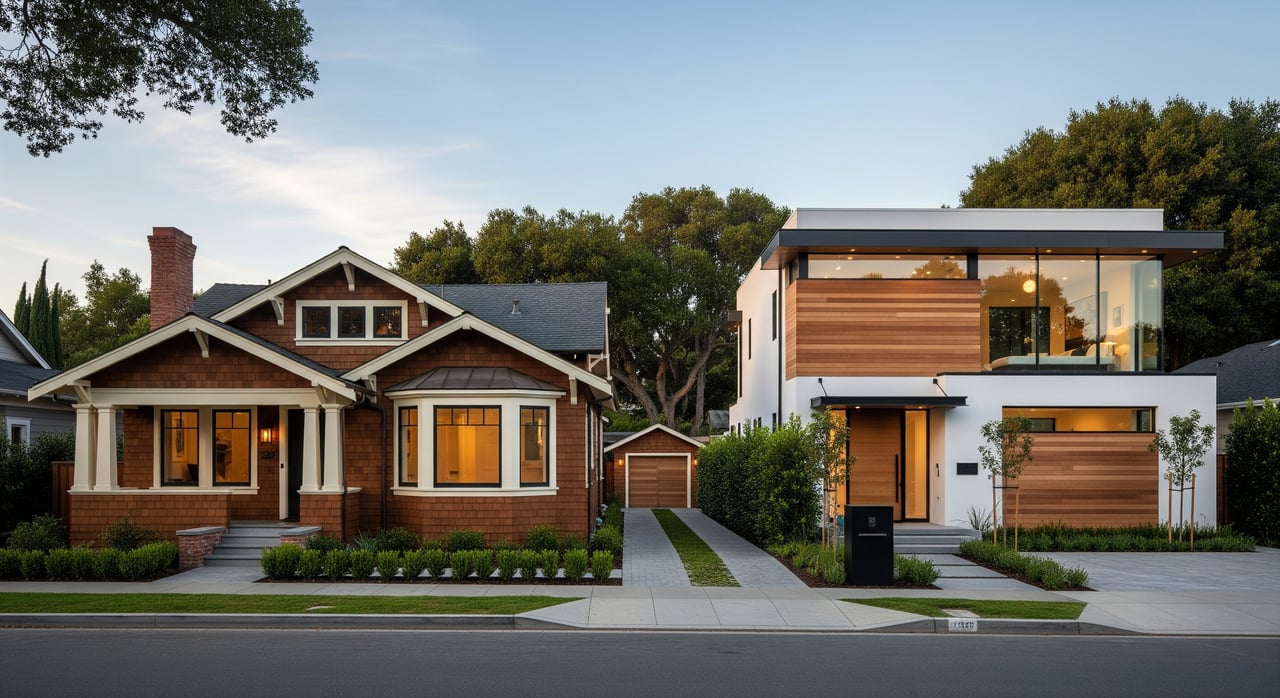
Trying to decide between a brand-new build or a beautifully renovated home in Menlo Park? You are not alone. With limited land, high demand, and strict review processes, the choice here feels bigger than in many markets. This guide walks you through what you really get with new construction versus renovated homes, including costs, permits, financing, timelines, and resale factors specific to Menlo Park. Let’s dive in.
Menlo Park market reality
Menlo Park sits in a high-demand Peninsula corridor with limited developable land. That means true new construction single-family homes are relatively scarce and often come from teardown-and-rebuild projects or small infill developments. Many buyers here find move-in ready options through high-quality renovations rather than brand-new builds.
Local review, zoning limits, and neighborhood compatibility expectations shape what you can build or change. You will see new homes and major remodels in pockets like parts of West Menlo and areas with larger or subdivided lots, but availability shifts quickly. If you value a turnkey experience, both new construction and thoughtfully renovated homes can get you there in this market.
New construction: benefits
- Brand-new systems and structure that meet current California Building Code, Title 24 energy standards, and CALGreen.
- Modern layouts with higher ceilings, open plans, and efficient mechanicals that fit today’s preferences.
- Builder warranties that reduce near-term maintenance risk.
- Strong energy performance that can lower operating costs over time.
New construction: trade-offs
- Higher total cost in Menlo Park due to land premiums and construction expenses.
- Longer timelines for design, permitting, and build, especially with discretionary review.
- Neighborhood compatibility considerations that can limit size, massing, or style.
- Property tax reassessment for new construction under California rules.
Renovated homes: benefits
- Often a faster path to move-in readiness if work is complete and permitted.
- Potentially lower upfront cost compared with buying a lot and building new, depending on the site.
- Access to established neighborhoods where few new builds come to market.
- Opportunity to retain character while updating systems and finishes.
Renovated homes: trade-offs
- Older structures can conceal hidden issues that add cost, especially with major remodels.
- Partial updates may not address all systems unless the scope is comprehensive.
- Warranties typically limited to the contractor’s scope and timeframes.
- Resale performance depends on the quality and taste alignment of the renovation.
Costs and timelines in this area
In Menlo Park, the biggest cost driver is often the land itself. New builds carry a premium for the lot and modern construction, while high-quality renovations can command similar pricing if they are well executed and align with buyer preferences. Major remodels and new construction also include soft costs like design, engineering, permitting, and consultants, plus carrying costs such as interest, taxes, and insurance during the project.
Expect longer timelines for new construction than for most renovations, due to design, plan review, and inspections. Renovations that move walls or alter systems still require permits and can take months. Older homes may need contingencies for items like structural work, pest repairs, or hazardous material abatement uncovered during demolition.
Use a simple buy-versus-build pro forma to compare:
- Purchase price of the property or lot.
- Hard costs for construction or renovation.
- Soft costs for design, permits, and consultants.
- Carrying costs for financing, taxes, and insurance.
- Contingency for surprises.
- Expected resale value and timing, based on local comps.
Permits and approvals
Menlo Park’s Planning and Building processes govern both new construction and substantial remodels. You will need to confirm zoning, setbacks, lot coverage, and floor area ratio. Certain neighborhoods or overlays may require design review or additional approvals. Plan-check and inspection schedules can add time, so build that into your calendar.
New builds must comply with current California Building Code, Title 24 energy standards, and CALGreen. Large remodels may trigger broader code upgrades even if you are not rebuilding the entire home. Because the area is seismically active, structural upgrades are common in significant renovations.
For property taxes, California’s Proposition 13 generally reassesses value when ownership changes or when there is new construction. Major additions or rebuilds are likely to be reassessed. Confirm specifics with the San Mateo County Assessor.
If you are considering an accessory dwelling unit, state law and local rules have made ADUs more feasible. ADUs can add flexibility and value, but they require proper permitting and utility coordination.
Financing and warranties
Buying new construction
You may see construction-to-permanent financing, staged draws, or builder contract allowances. Lender criteria can be stricter for construction loans, and timelines matter for rate locks and draw schedules. New builds typically come with a builder’s warranty for workmanship and structural items, with terms that vary by builder.
Buying a renovated home
Conventional mortgages are common for move-in ready homes. If you plan to renovate after closing, consider renovation loans such as Fannie Mae HomeStyle, Freddie Mac CHOICERENOVATION, or FHA 203(k). Contractor warranties will cover limited scopes, so thorough inspections and clear documentation are key.
Insurance and inspections
Older homes with older systems can face higher insurance costs. Order comprehensive inspections for structure, roof, pest, and mechanicals, and consider testing for hazardous materials where relevant. For new homes, a third-party punch-list inspection before closing helps verify quality and code compliance.
Resale and neighborhood fit
Turnkey properties tend to attract strong interest in Menlo Park. Buyers often value energy-efficient systems, modern kitchens and baths, smart-home features, and updated roofs, HVAC, plumbing, and electrical. New construction can stand out for layout and performance. A well-executed renovation that refreshes both design and systems can compete with new builds on resale in the same neighborhood.
Context matters. A new home that respects neighborhood scale and design expectations typically finds a broader buyer pool. Renovations that solve for floor plan, storage, natural light, and outdoor flow usually see better returns than purely cosmetic changes.
Decision checklist
Use this quick list to compare options for a specific property:
- Zoning and site constraints: setbacks, lot coverage, FAR, and any neighborhood overlays.
- Permit path and timeline: planning, design review, building permit, and inspections.
- Complete cost picture: purchase price, hard and soft costs, carrying costs, and contingency.
- Scope clarity: what systems and layout changes you want versus what the property allows.
- Contractor and architect bench: availability, references, and local experience.
- Property tax impacts: change in ownership and new construction considerations.
- Comps: recent sales of newly built and recently renovated homes nearby.
- ADU potential: feasibility, utility connections, and impact on value.
- Resale strategy: who the likely buyer will be and what they will pay for.
Get local help
Your best outcome in Menlo Park comes from a plan that fits your goals, budget, and timeline. You want clear guidance on permitting, a realistic pro forma, and neighborhood-specific comps before you commit. If you are weighing a teardown, evaluating a renovation scope, or hunting for a turnkey listing, connect with a trusted local advisor who can coordinate the right team and keep you on schedule.
Have questions or want to map your path to a confident purchase or sale? Work with Allison T. Paulino for boutique, high-touch representation backed by Peninsula market expertise.
FAQs
How long does new construction take in Menlo Park?
- Timelines vary by design and permitting, but expect longer than most renovations due to planning review, building permits, and inspections, followed by the build itself.
What triggers property tax reassessment after a remodel?
- In California, reassessment generally occurs with change of ownership or new construction; substantial additions or a rebuild can be reassessed, so confirm with the San Mateo County Assessor.
Which is cheaper overall: new build or renovated home?
- It depends on the lot cost, scope of work, soft costs, carrying costs, and expected resale; compare options with a full buy-versus-build pro forma.
Do lenders treat new builds and renovated homes differently?
- Yes. Construction loans use staged draws and specific underwriting, while move-in ready renovated homes typically qualify for standard conventional mortgages.
How do energy standards affect value in Menlo Park?
- New builds meet current Title 24 and CALGreen requirements, which can improve efficiency. Renovations can add upgrades, and buyers often value lower operating costs and modern systems.
Should I renovate before listing my Menlo Park home?
- It depends on budget, timing, and what local comps show buyers paying for; focus on improvements that align with buyer demand and provide a clear return in your neighborhood.
